Video Intercoms vs. Video Doorbells: Which Belongs on Your Front Door?
A doorbell you charge. An intercom you wire once and forget for a decade. Here is the honest difference and how to tell which one your New Jersey home actually needs.
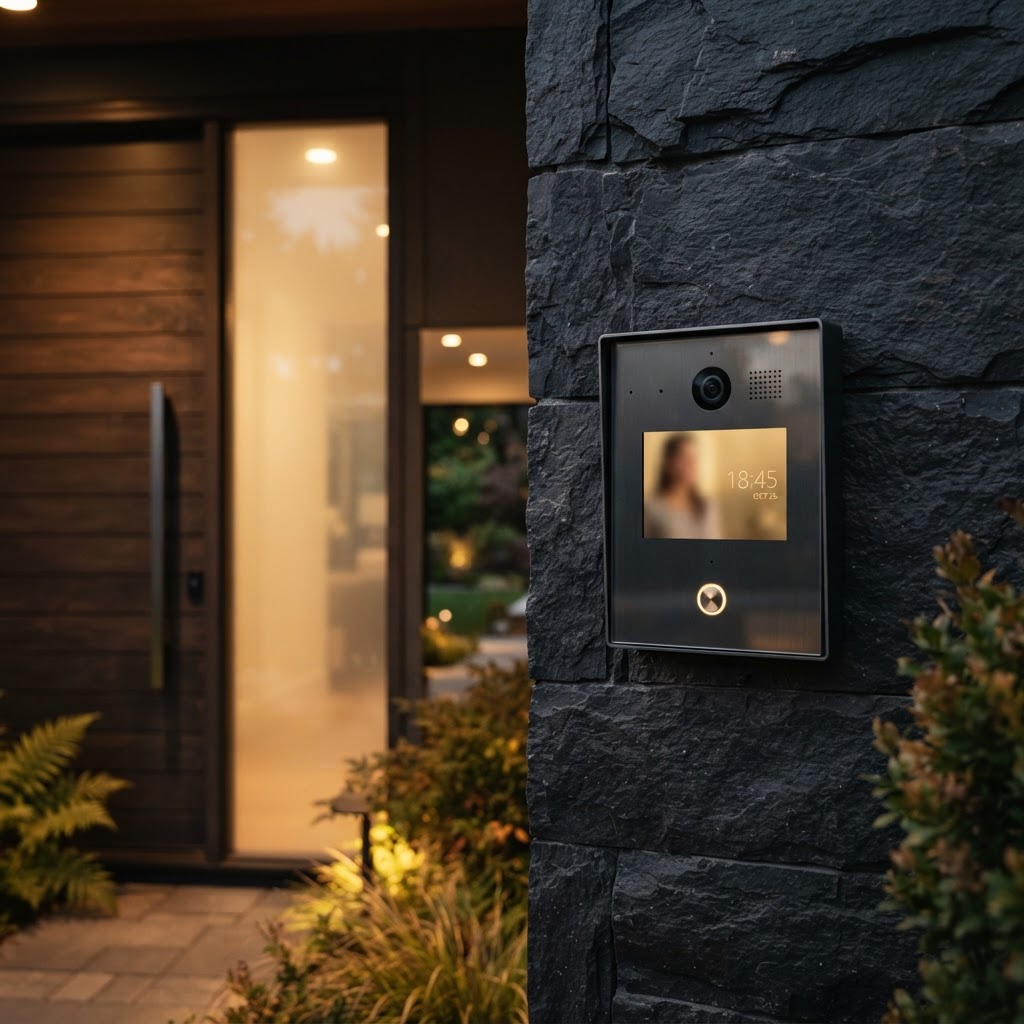
On paper, they sound nearly identical. Someone presses a button, a chime sounds, and a video feed shows up on your phone. In practice, a battery doorbell and a hardwired video intercom are built for very different jobs, and choosing the wrong one is the most common front-door regret we see.
What a Video Doorbell Does Well
A wireless doorbell is easy to love. It installs in under an hour, costs a fraction of a wired system, and gives you a phone notification with a snapshot of whoever is at the door. For an apartment, a rental, or a single entry where you mainly want a delivery alert, it does the job.
The trade-offs are also real. It runs on a battery or an existing chime circuit, so power is a constant concern. It usually records to a cloud subscription, which means another monthly bill. And when the Wi-Fi is weak at the front of the house, the one moment you need the feed is the moment it drops.
What a Video Intercom Does Better
- It runs on cable. A PoE intercom gets power and data over a single cable, so there is nothing to charge and no Wi-Fi dependence at the door. It comes back on its own after a power outage.
- It records locally. Footage lands on your recorder alongside your other cameras, with no monthly plan and no third party holding the video.
- It handles more than one door. Gate, side entrance, garage, and back door can all ring the same indoor stations, which is why intercoms are standard on larger properties.
- It holds up outdoors. Commercial-grade units are built for years of sun, salt air, and temperature swings on a New Jersey porch.
Indoor Stations Are the Underrated Piece
A doorbell sends the visitor to your phone. An intercom can ring a wall-mounted station in the kitchen or hallway with a live picture, so you can see and speak to the visitor without finding your phone or unlocking it. Families with kids at home and anyone who works from home tend to value this more than the app. It is also the reason intercoms remain common in multi-unit buildings, where several apartments need to answer one entrance.
How to Decide
Ask yourself three questions. How many entry points need coverage? Is the door within strong Wi-Fi range or can a cable be pulled to it? And would you rather pay once for hardware or every month for storage? If the answer is one door, good Wi-Fi, and the lowest upfront cost, a doorbell is genuinely fine. If it is multiple entries, an unreliable signal, or no patience for subscriptions, an intercom is the better investment.
Where Each One Fits in a Larger System
If you already have or plan to add cameras, an intercom drops into the same recorder and the same app, which keeps your front door consistent with the rest of the property. If you are starting from nothing and want to test the waters, a doorbell is a reasonable first step, and it can coexist with a full system later.
The front door is the first thing a visitor sees and the first thing you will want to check from a hotel room or a job site. Either way, wire it if you can. We are happy to look at your entry and tell you what is practical for your house.
Advanced Tech Solutions LLC
New Jersey Smart Home Experts