Whole-Home WiFi: Why One Router Isn't Enough Anymore
Buffering in the bedroom, dead zones upstairs, smart devices acting up? The culprit is usually a single router asked to cover an entire house. Here's what a properly designed home network looks like.
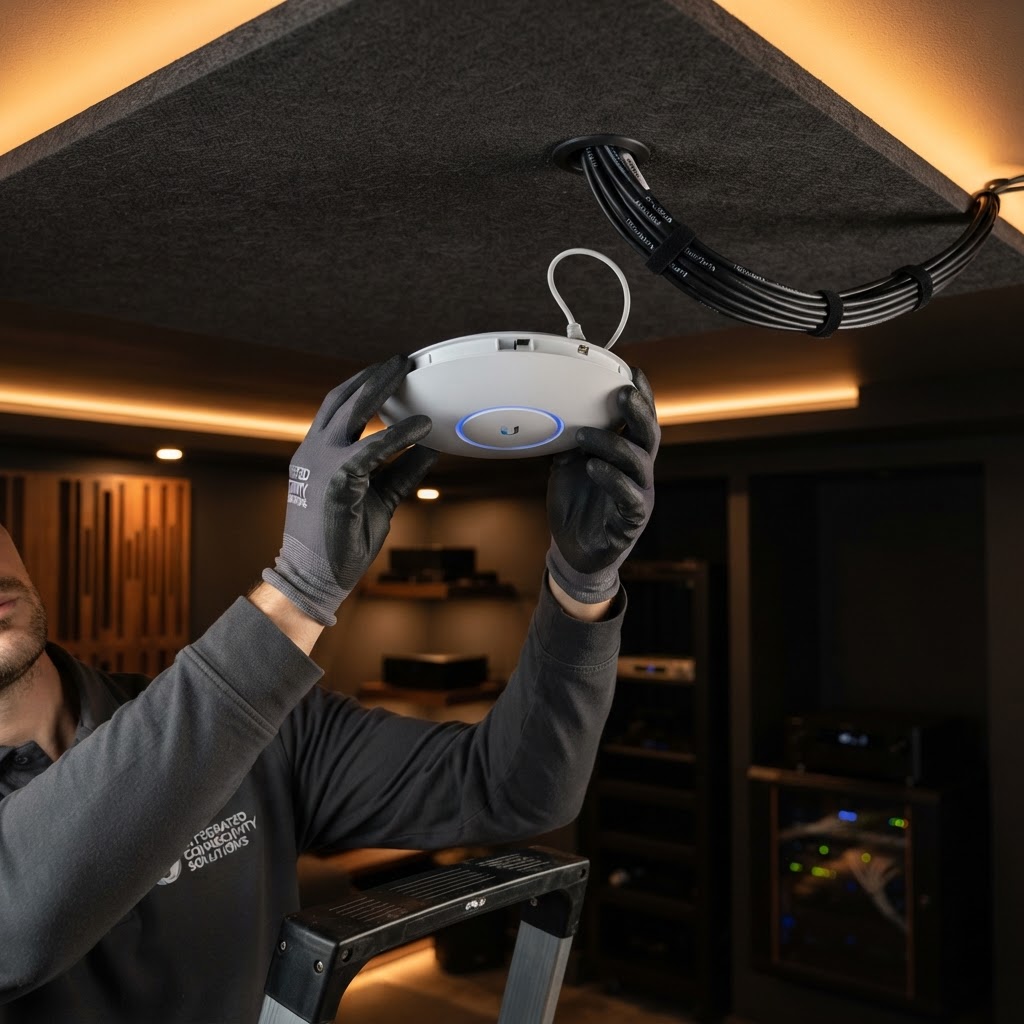
We hear it constantly: "My internet is supposed to be fast, so why does video keep buffering in the bedroom?" Nine times out of ten, the problem isn't your internet plan — it's a single router being asked to cover an entire house it was never designed for.
The Single-Router Problem
The router your internet provider gave you is built to do one job: share your connection in a modest radius. It wasn't designed to punch through floors, insulation, HVAC ductwork, appliances, and the walls of a modern home. As a result, the signal that's strong next to the modem is often a fraction of that two floors up or on the opposite side of the house.
And here's the part most people don't realize: your devices don't fail gracefully. A smart TV, a video doorbell, and a security camera at the edge of the WiFi range don't just slow down — they drop connections, miss recordings, and drain your patience. Smart home devices are especially sensitive to weak, unstable WiFi.
What Whole-Home WiFi Actually Looks Like
A properly designed network is built around coverage, not one device's reach. In practice, that means:
- Strategically placed access points — ceiling- or wall-mounted units wired back to a central switch, blanketing every room and outdoor living space with strong, even signal.
- Structured cabling (Cat6/Cat6a) connecting everything, so your backbone runs at full speed with zero wireless interference.
- Separate networks for guests and smart devices, keeping your main devices fast and secure.
- Enterprise-grade equipment built to handle dozens of simultaneous devices — not the four or five a consumer router expects.
The Payoff
When a network is done right, the difference is immediate. Video calls stop freezing. Streaming works in every room — including the patio. Security cameras record reliably, and smart home automation responds instantly. And because everything is wired back to a central point, troubleshooting is dramatically simpler when something does act up.
If your home has dead zones, dropouts, or smart devices that behave unpredictably, it's not something you have to live with. A walkthrough of your property is all it takes to map out where coverage is failing and what it would take to fix it for good.
Advanced Tech Solutions LLC
New Jersey Smart Home Experts